Time to document one patient
Charting at the speed of speech
Manorama EMR is a medical record doctors fill in by talking. I designed it end to end, from the first meetings with senior doctors to the screens now used in clinics and hospitals.
Play the consultationFifteen minutes of forms, every patient
In the old system a doctor typed every complaint, finding and prescription into dense forms while the patient waited across the desk. Documentation alone took 15 to 20 minutes an appointment.
That capped how many patients a doctor could see, and pulled their eyes from the patient to the screen. Many senior doctors were also uneasy with complex software.
So we let them talk
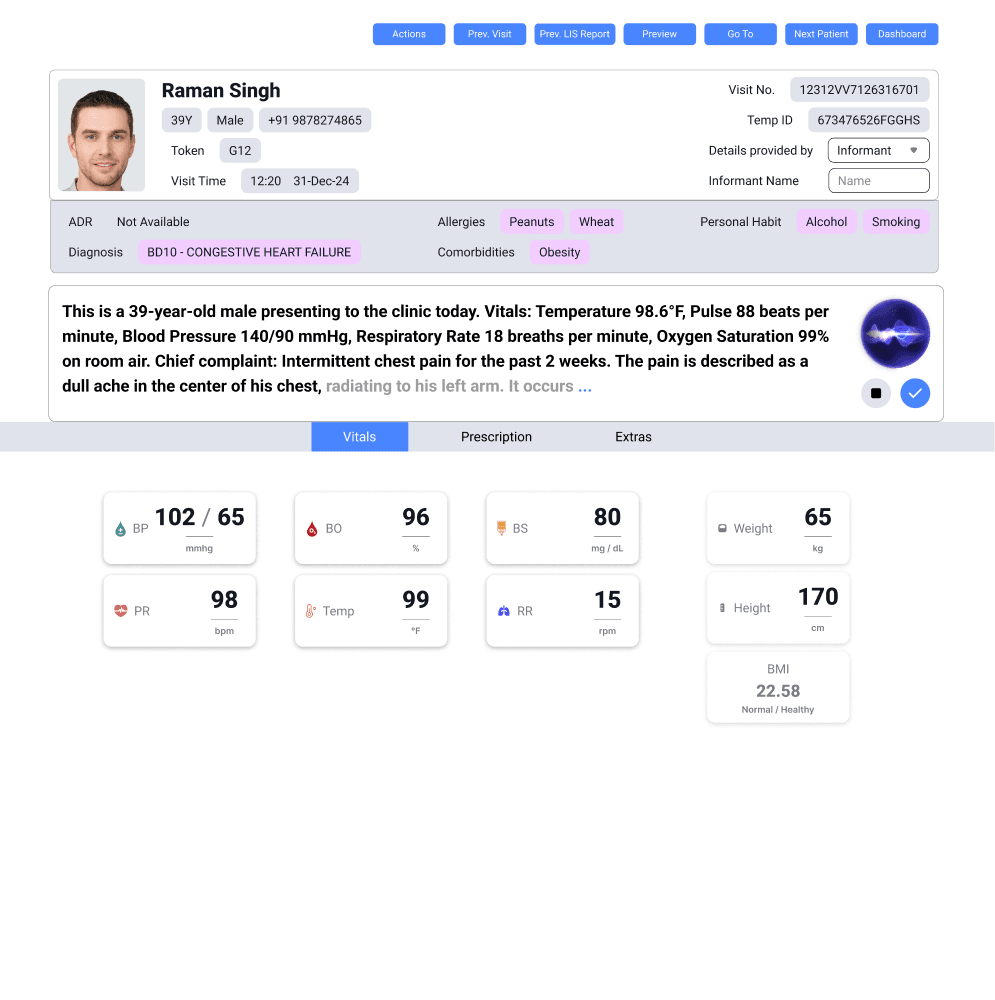
Manorama’s own medical language model listens to the consultation and fills in the record while the doctor speaks. I designed everything the doctor sees while that happens. Scroll through one consultation below.
Scroll, and the doctor speaks

Then the history. The record is done.
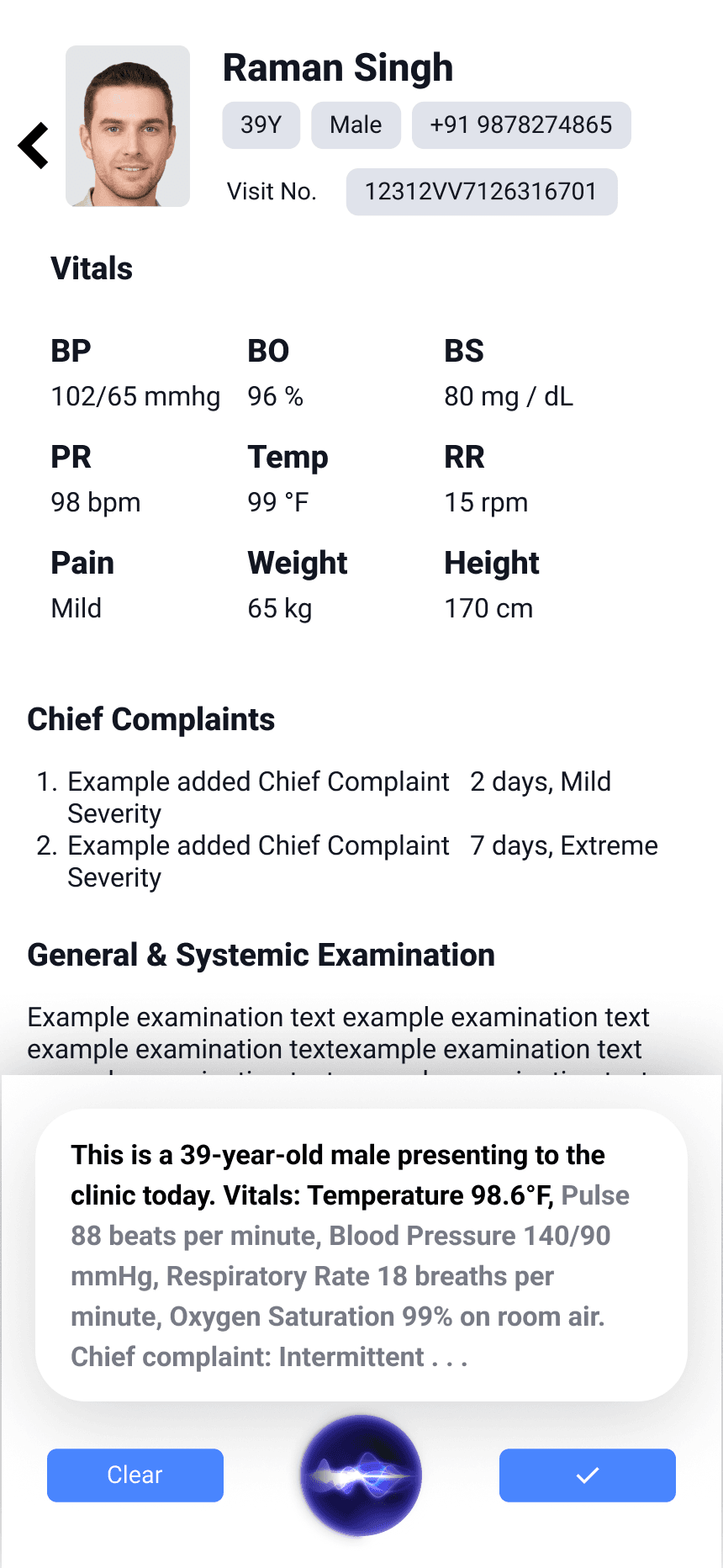
This is a 39-year-old male presenting to the clinic today. Vitals: temperature 98.6°F, pulse 88 beats per minute, blood pressure 140/90 mmHg, respiratory rate 18 breaths per minute, oxygen saturation 99% on room air.
Chief complaint: intermittent chest pain for the past 2 weeks. The pain is a dull ache in the center of his chest, radiating to his left arm. It comes on with exertion, like climbing stairs or carrying groceries, and is relieved by rest.
He denies shortness of breath, dizziness or palpitations. He has a history of hypertension, hyperlipidaemia and type 2 diabetes, and takes his medicines as prescribed.

Chief complaint
Intermittent chest pain 2 weeks- Site
- Center of chest, dull ache
- Radiates
- Left arm
- Brought on
- Exertion: stairs, carrying
- Relieved
- Rest
Negative findings
- No shortness of breath
- No dizziness
- No palpitations
Past history
- Hypertension
- Hyperlipidaemia
- Type 2 diabetes
- Medicines taken as prescribed
What changed
- 75%
less time on documentation
3 to 5 minutes an appointment, down from 15 to 20
- 95%
transcription accuracy
up from 90% as the in-house model kept learning
- 4
design rounds
each one reviewed by senior doctors and the tech team
- 5
months
from the first meeting to clinics and hospitals
I sat with the doctors and noted how long documentation took, before the redesign and after it. Role: product designer. Client: Manorama Infosolutions. Shipped April 2025.
Four rounds with senior doctors
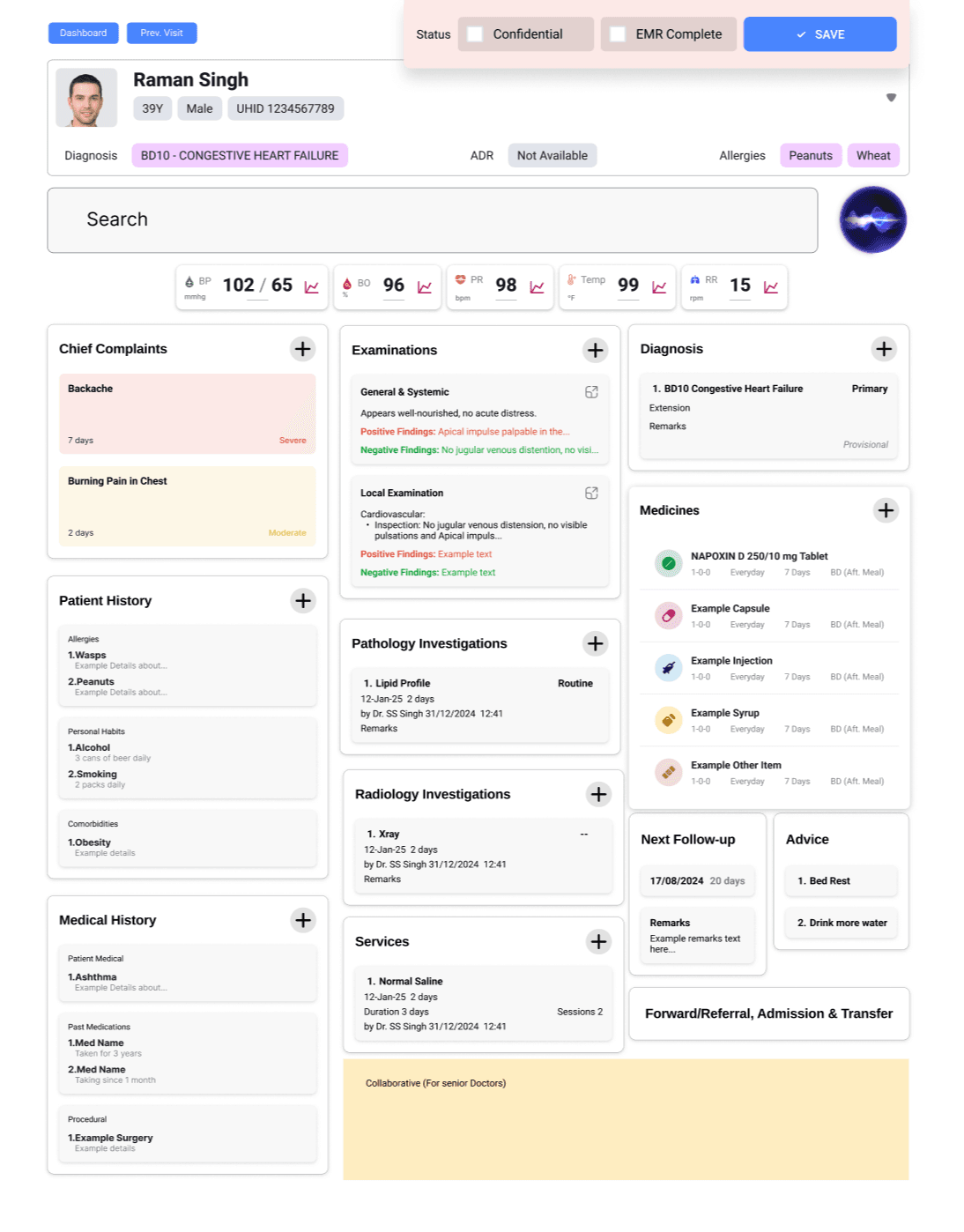
What the doctors prescribed
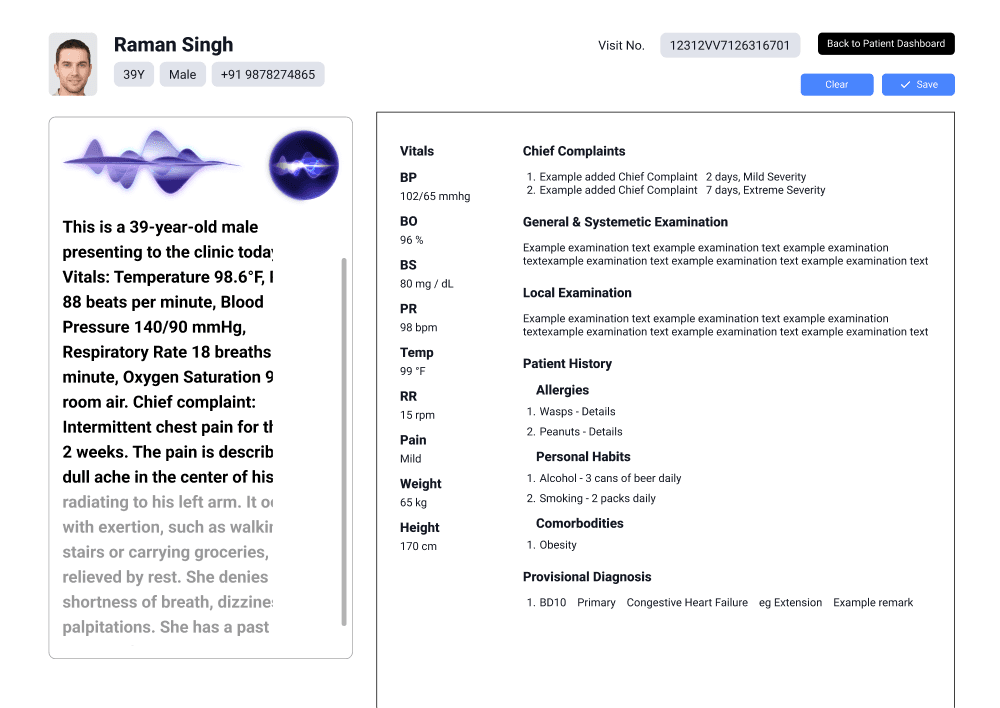
They sent changes back as annotated slides after every round. Each one changed the screen.
- A live preview while the doctor narrates
- Sections the AI filled, highlighted
- Vitals to the side
- Provisional and final diagnosis as main fields
- Smoking counted in packs
- Positive findings in red, negative in green
A closer look
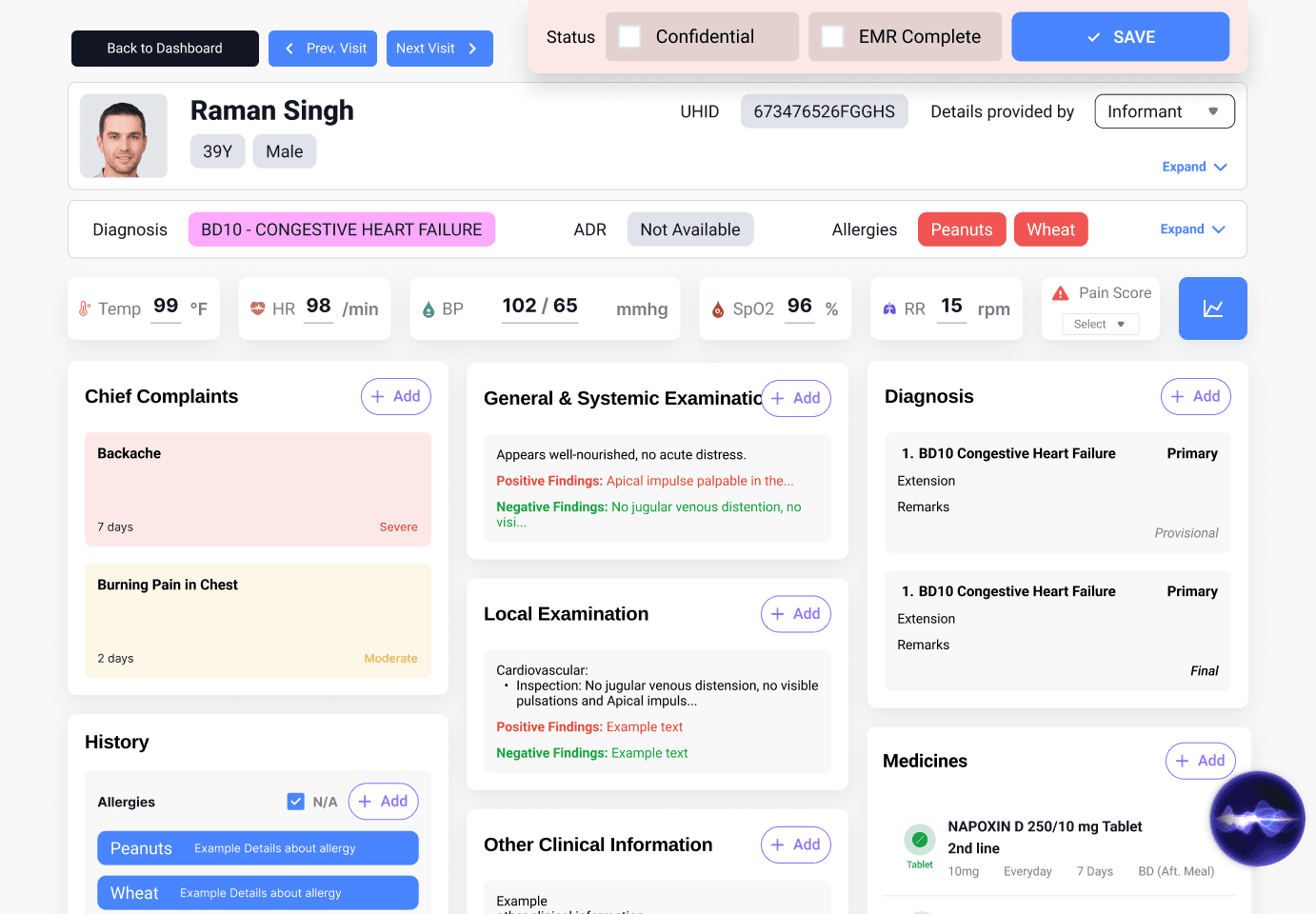
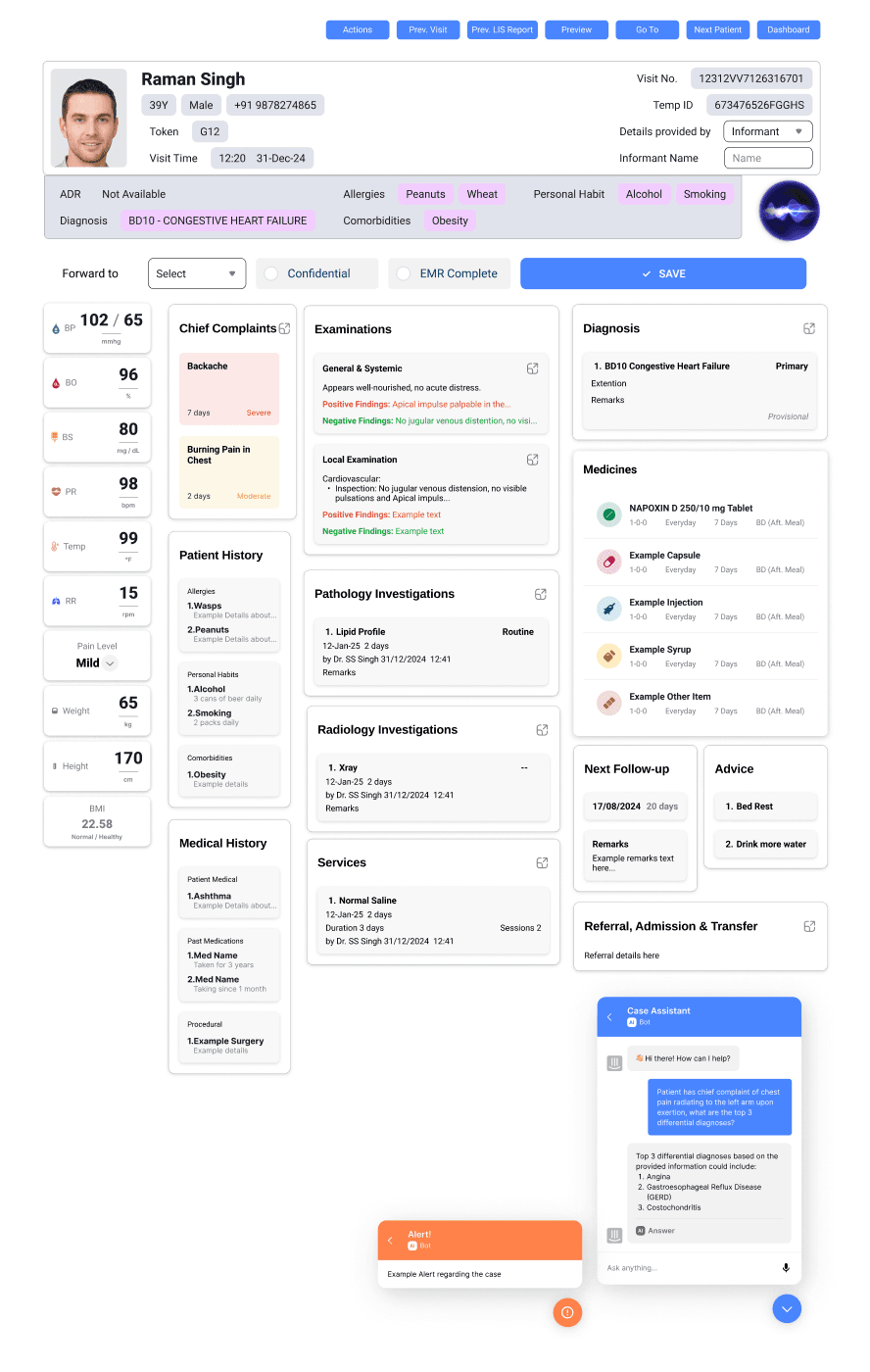
- The shipped consultation screen. Every section is a tile with its own Add button.
- Diagnosis, ADR and allergies stay pinned under the patient, always in view.
- Vitals in one strip, read in a single glance.
- Positive findings in red, negative in green: a record you scan, not read.
- And the voice button, always one tap away.
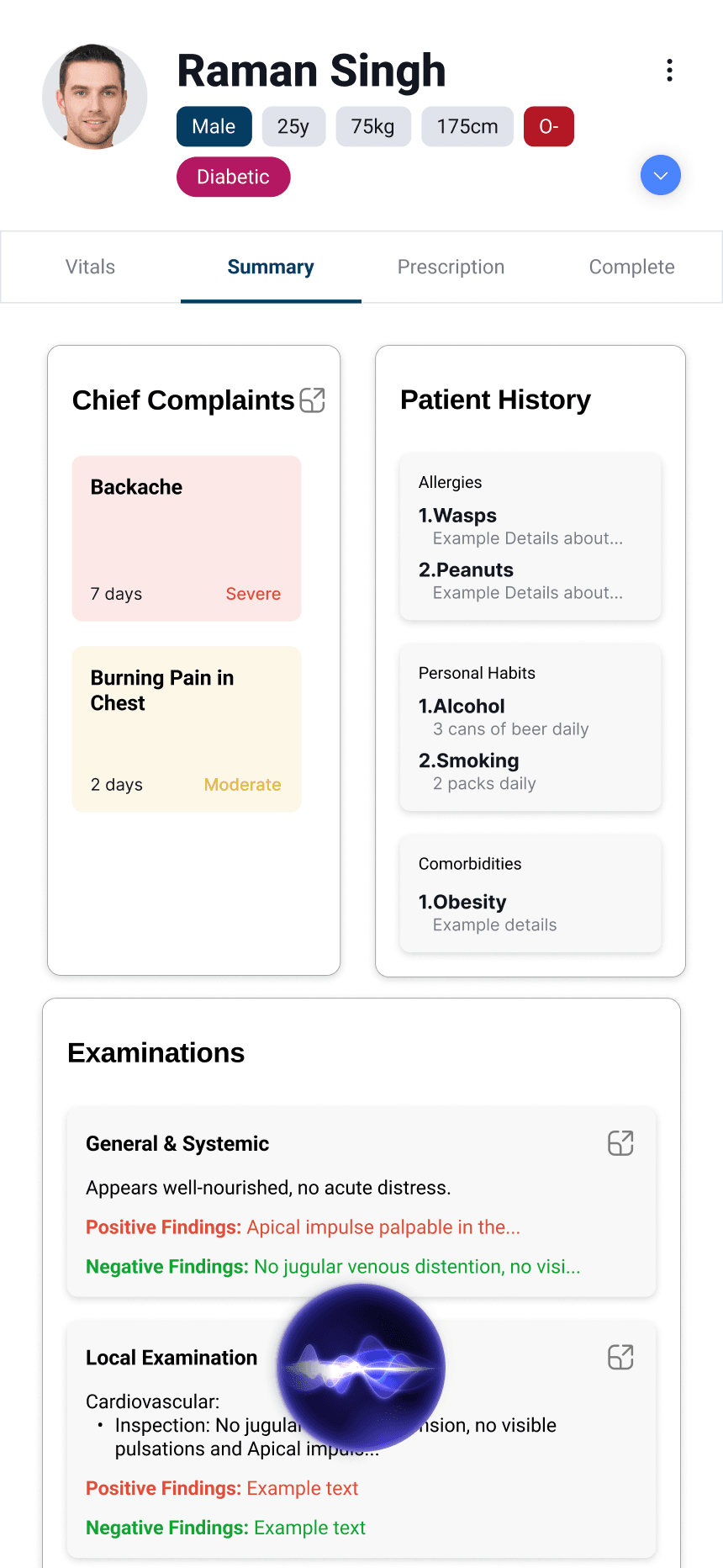
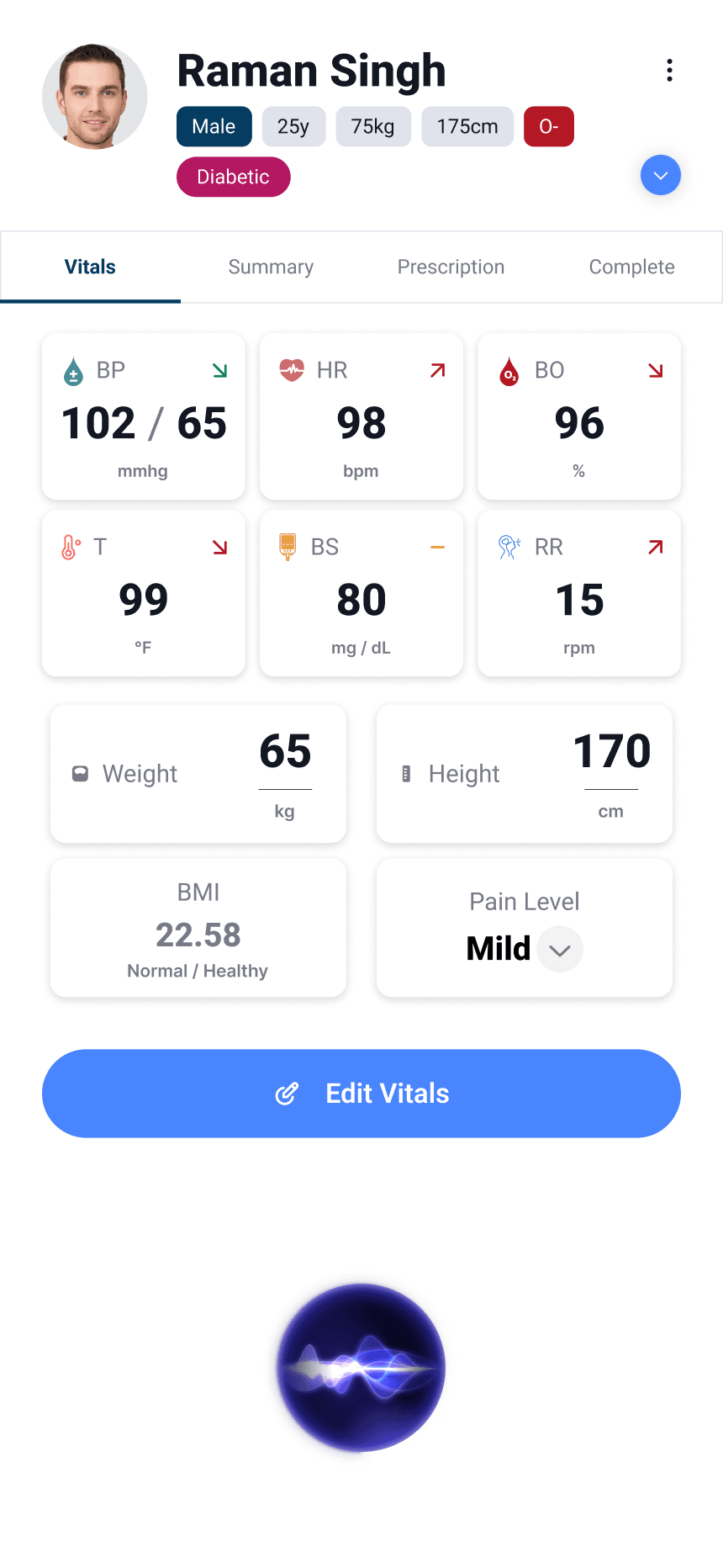
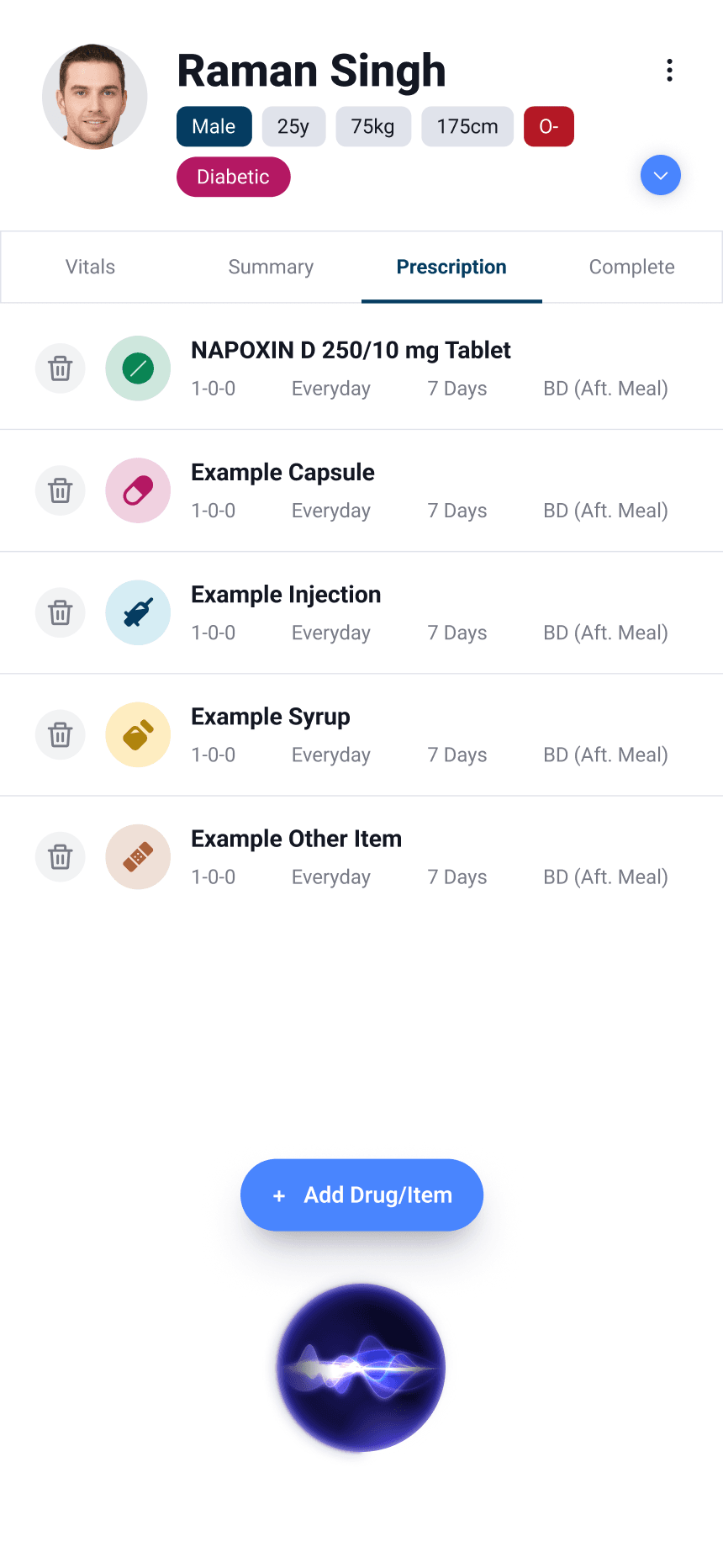
The same record on a phone
Added in round three, with the voice button in reach of a thumb.
What I took from it
I studied Suki AI, the voice assistant clinicians use in the US. It proved voice documentation works. Our doctors needed more: a quick way to fix a wrong word, a screen that works without training, and voice and touch as equals.
Four rounds turned a well-researched first wireframe into something quite different. The goal was never to show off the AI. It was to give doctors back the minutes, and the eye contact, that typing took.