An AI-enabled hospital system for every role in an Indian hospital, and the Android app that lets doctors run their OPD from a phone.
OPD · NOW SERVING042
036OPD 2Done
037OPD 4Done
038OPD 1Done
039OPD 4In room
040OPD 2Next
041OPD 1Waiting
042OPD 4Waiting
043OPD 3Waiting
044OPD 2Waiting
045OPD 1Waiting
The problem
Five systems, one patient, and a doctor who is always running late
Indian doctors split their day between hospitals, wards and OPD queues, and their patients’ records are split across three to five systems. Reports were buried in long records, staff had been burned by software too complex to learn, and doctors spent around 40% of each appointment on administration.
40+
hours shadowing in 3 hospitals
12
in-depth interviews
2 wk
diary study with 4 doctors
8
products benchmarked
180+
observations, mapped into 5 themes
Doctors had normalized the small inefficiencies, so they never mentioned them in interviews. They only showed up when we watched: prescriptions sent on WhatsApp, notes finished after the last patient, a report hunted across three tabs.
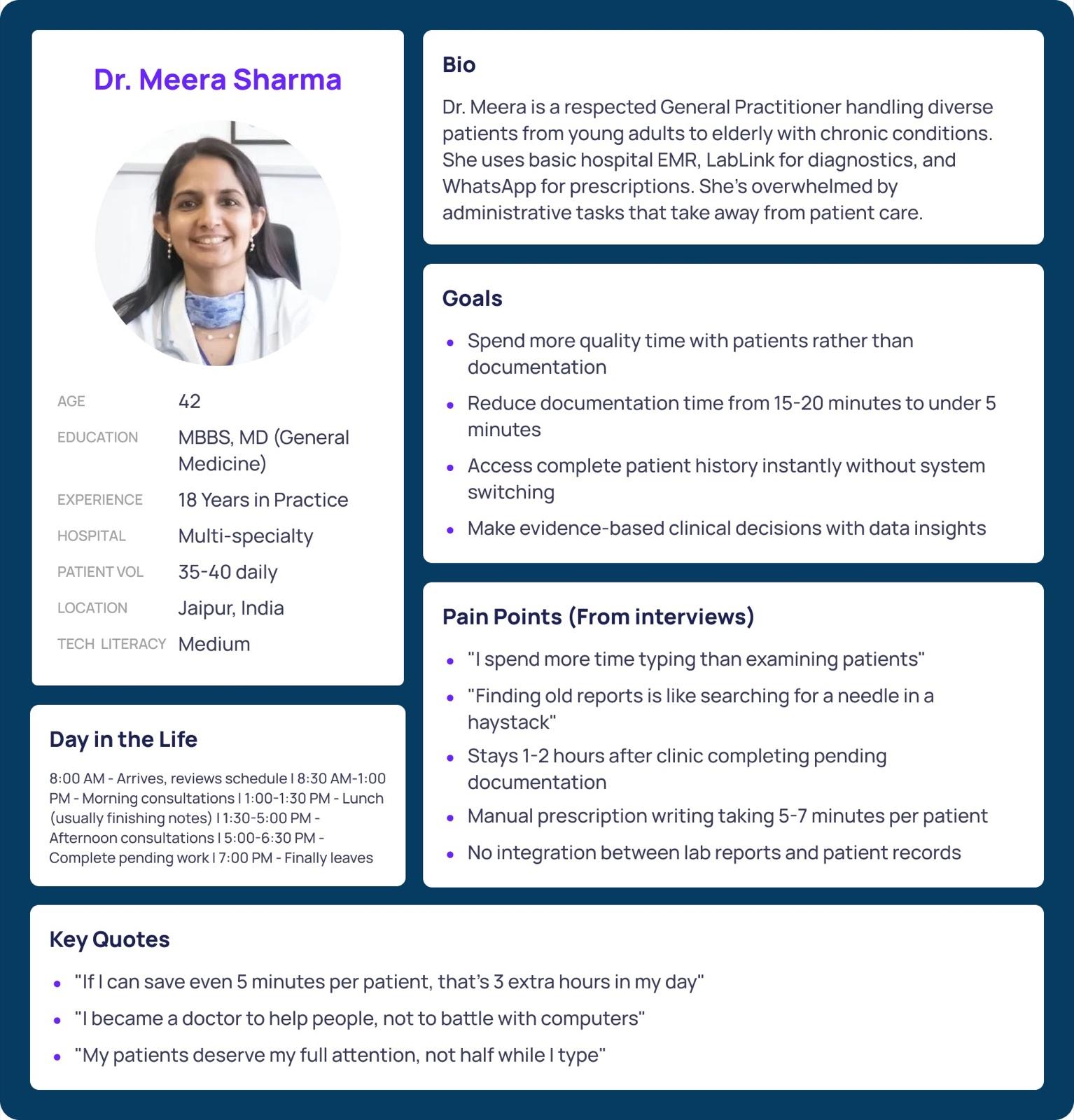
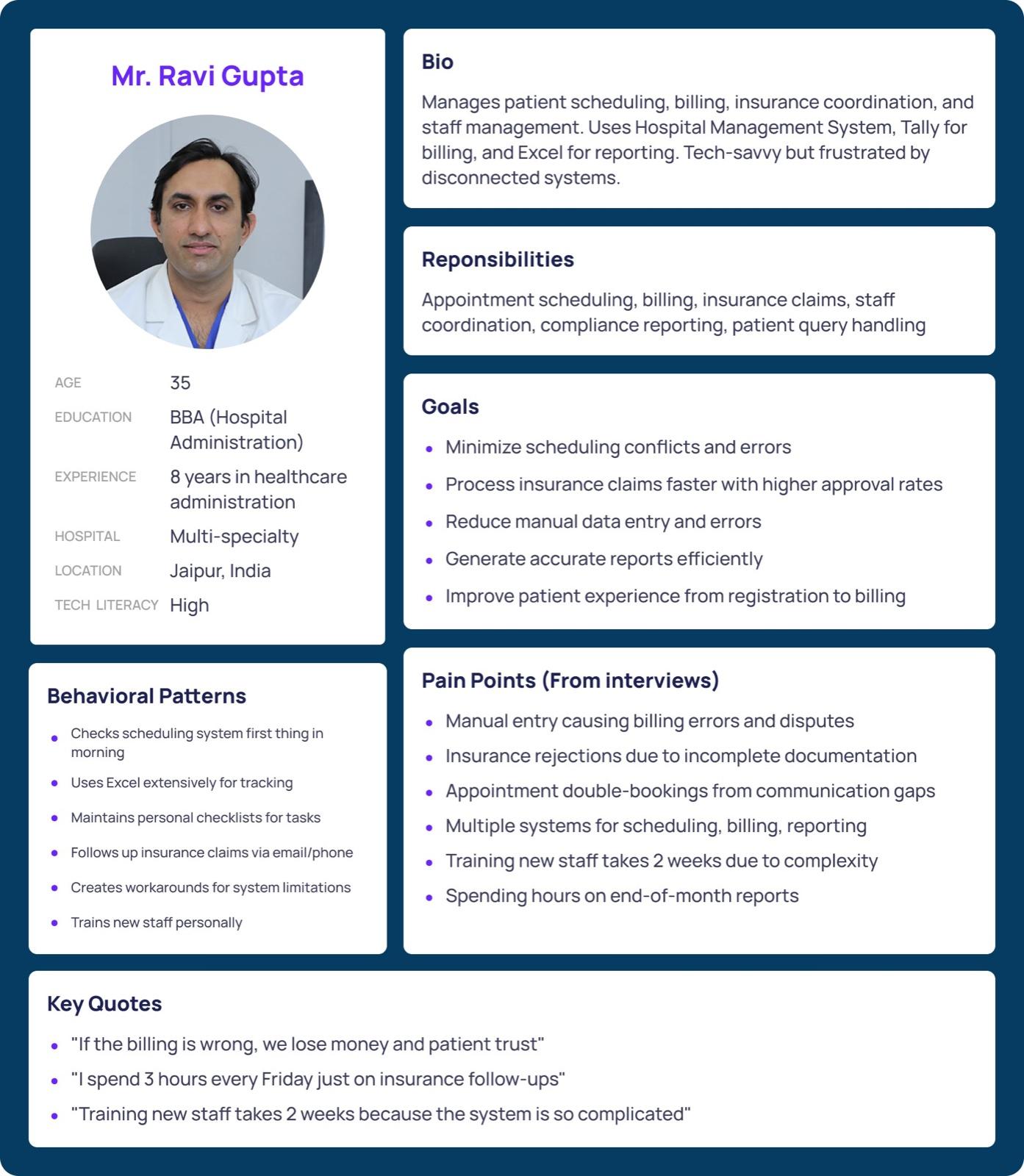
Dr Meera runs the consultation.Mr Ravi runs the desk.
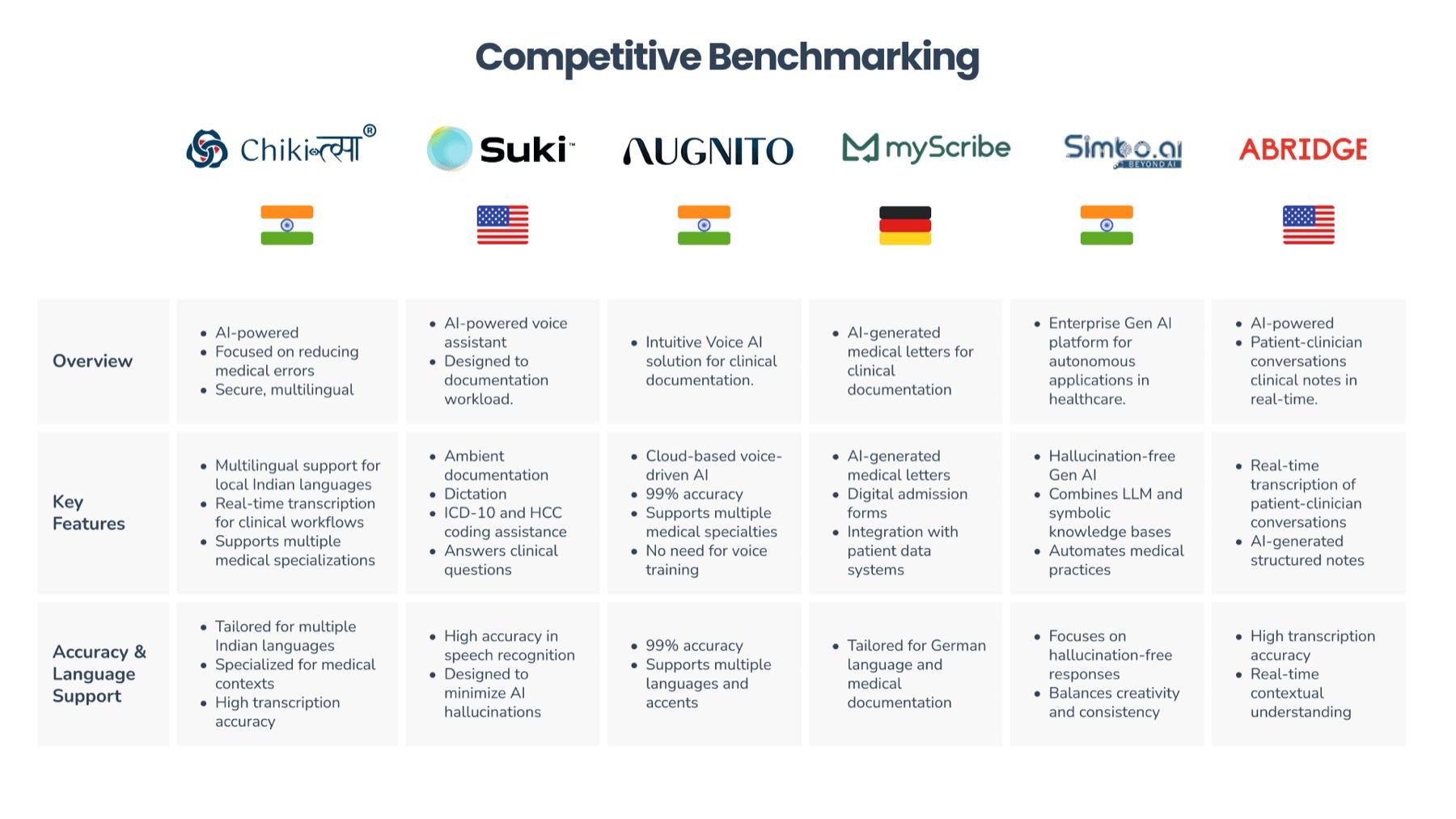
Eight voice and AI documentation tools from India, the US and Germany, compared on features and language support.
One record, every role
One patient record, six roles around it
Every role works on the same record from its own side. Nobody re-types what someone else already entered.
Reception
Insurance desk
Nursing station
IPD doctor
Cash desk
Administrator
ChikitsaIPD patient record
Abhay B.Male · 25 · DiabeticPlaceholder patient
ReceptionRegistered and admittedUHID 24-4356-8852 · Ward B, bed 12
Insurance deskPre-authorization filedPayer details and documents attached
IPD doctorVisit and prescription4 medicines, 2 investigations, follow-up
Cash deskInterim bill raisedDeposit, packages and pharmacy in one ledger
AdministratorOn the hospital overviewBeds, revenue and claims, live
Try it
Reception assigns beds floor by floor
A bed shows who is in it with one hover. Pick a floor, point at a bed, and click a free one to admit the next patient.
5 beds free on this floor
General ward A
General ward B
Occupied
Free
Just assigned
The doctors’ app · 39 screens
The OPD, in a doctor’s pocket
Decision 1
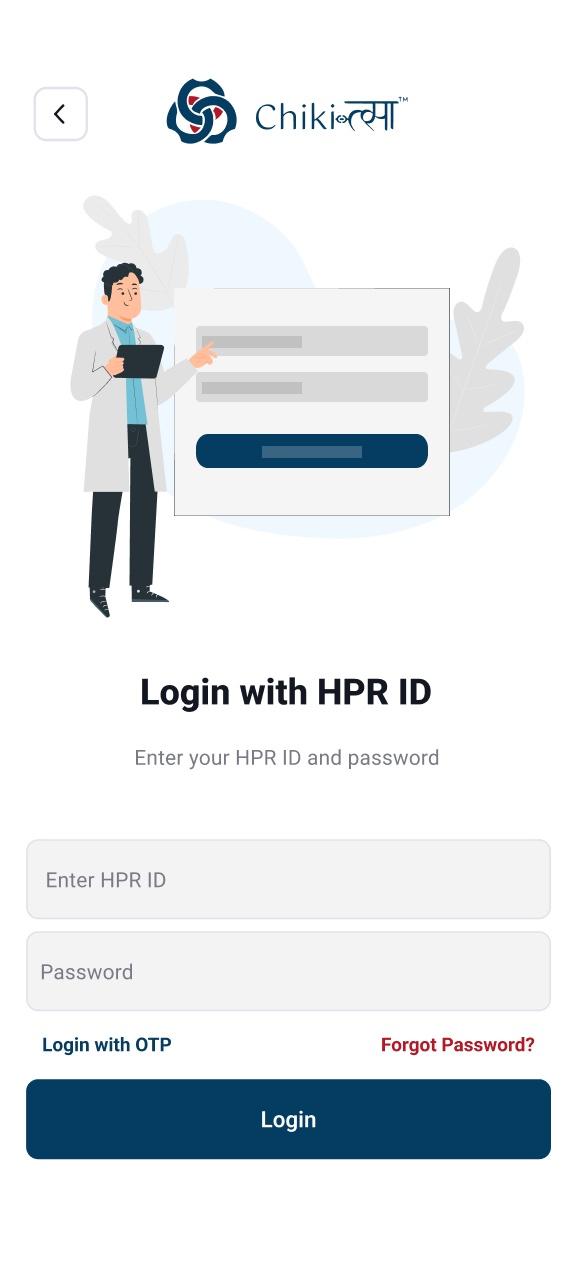
Sign in the way Indian doctors already identify
Mobile OTP, Healthcare Professional Registry (HPR) ID or email.
Decision 1
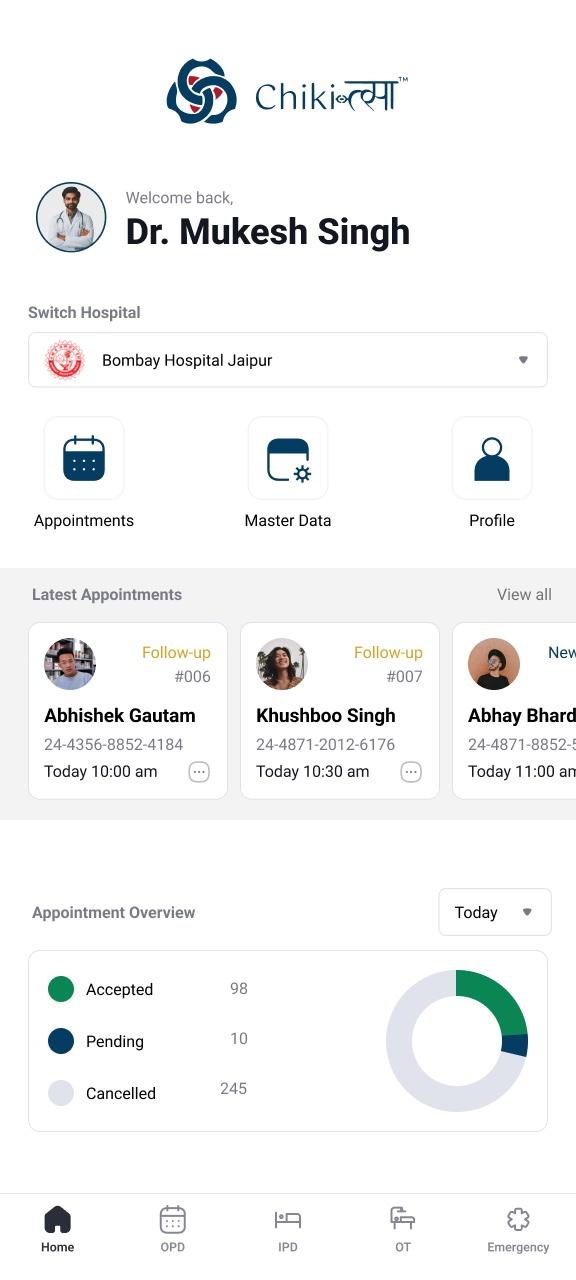
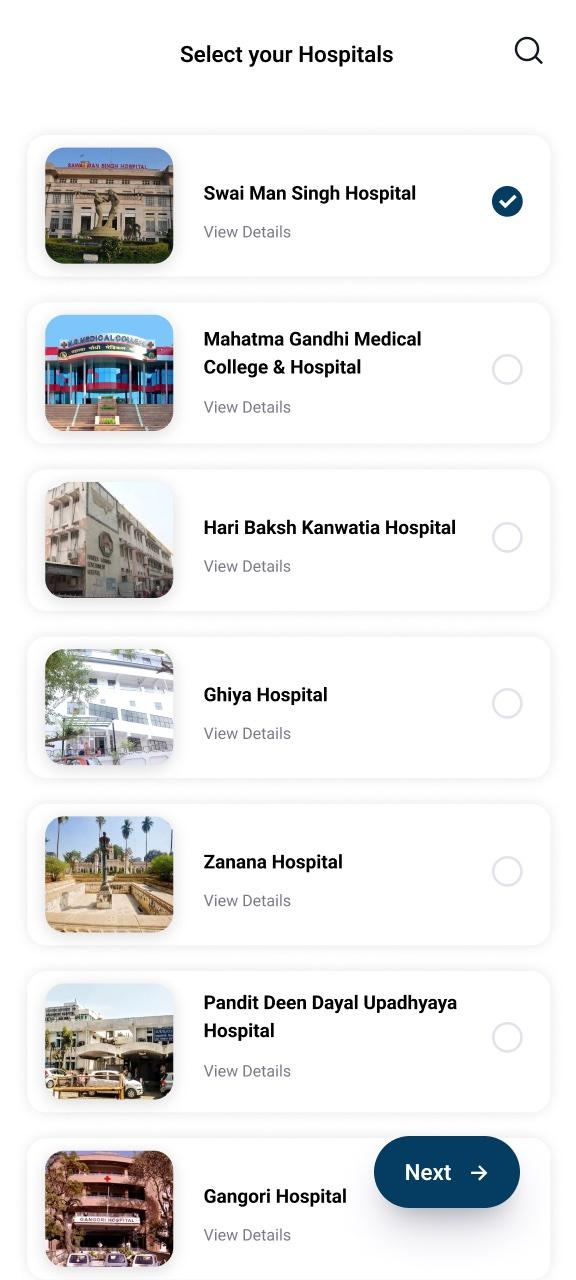
Pick today's hospital
Many doctors consult at more than one hospital a day. They choose where they are, and can switch from the dashboard.
Decision 2
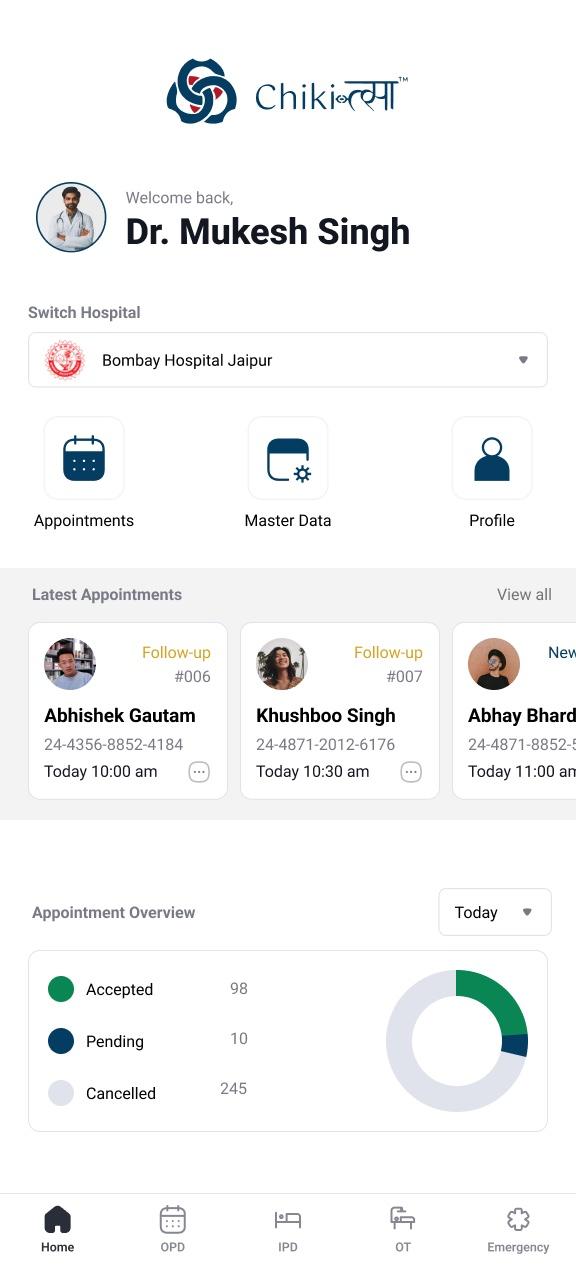
The queue at a glance
Accepted, pending and canceled appointments, right on the dashboard.
Decision 2
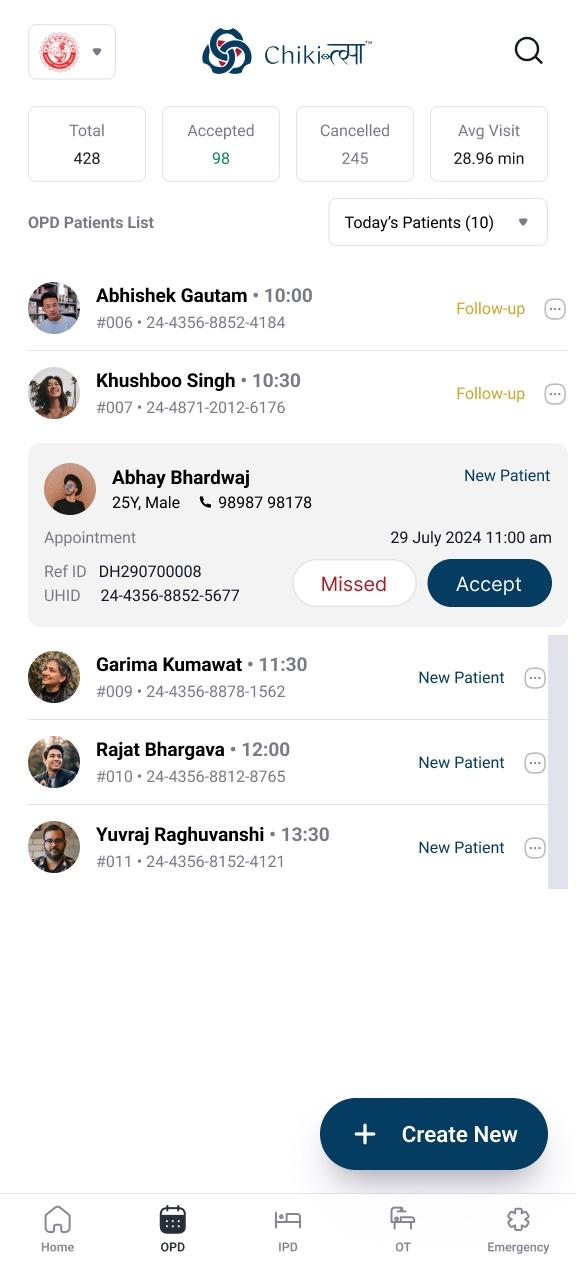
Accept a patient in place
The OPD list expands in place; missed and closed patients sit in their own tabs.
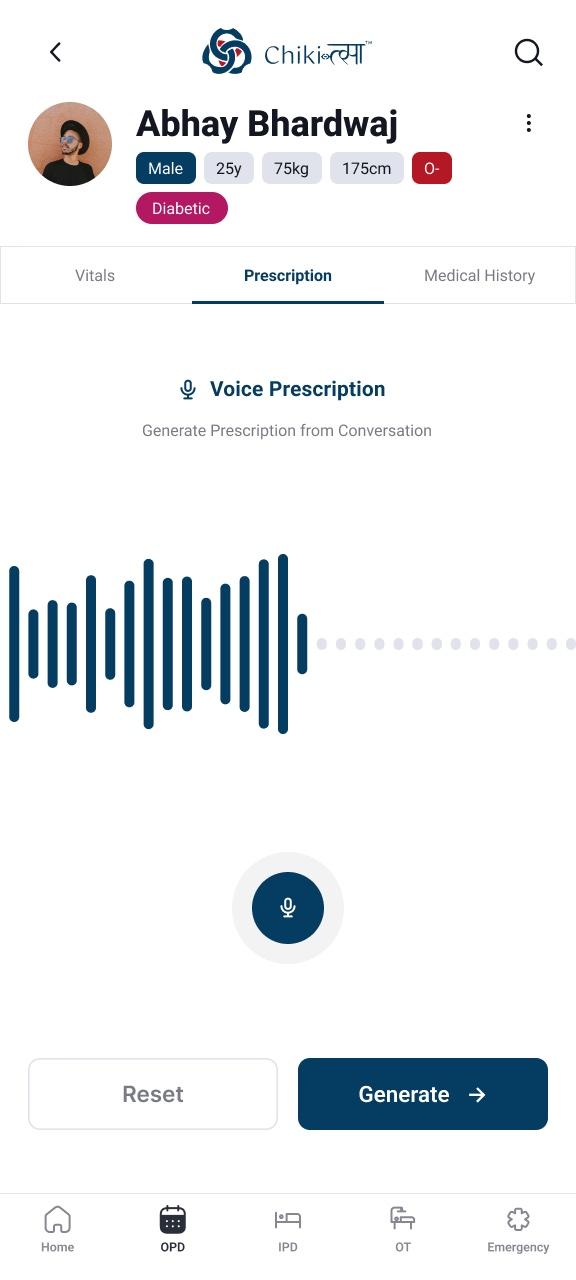
Decision 3 · step 1 of 5
Speak, or start from history
Voice prescription drafts from the conversation, and Generate with AI fills the steps.
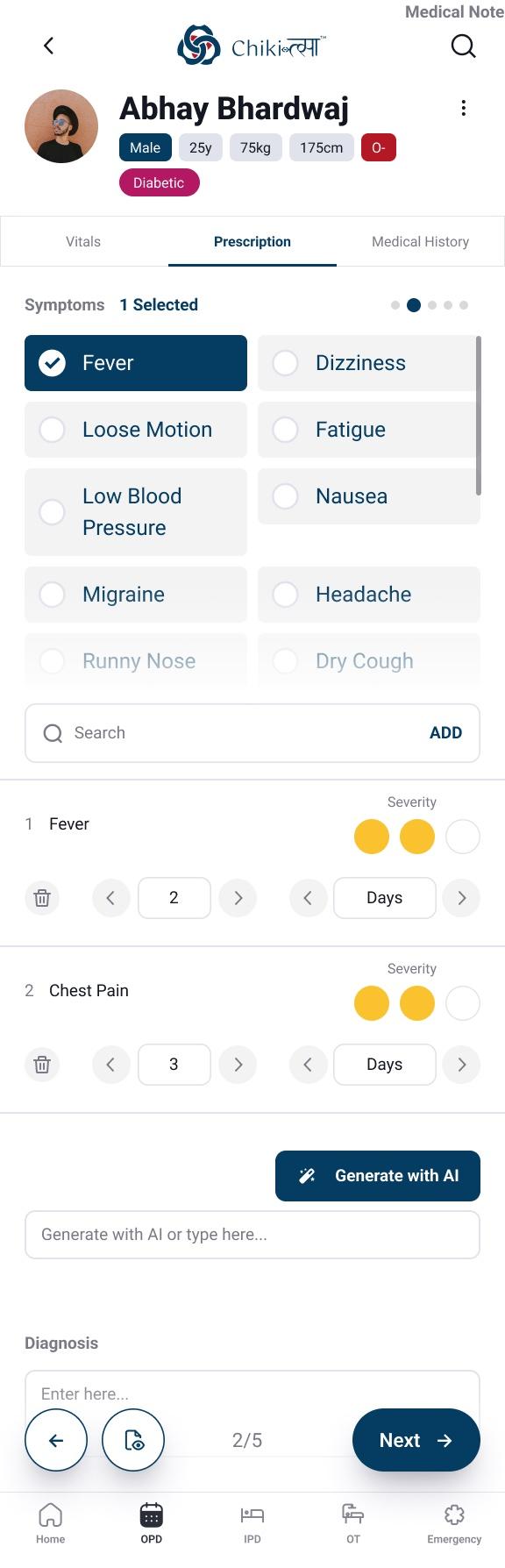
Decision 3 · step 2 of 5
Symptoms with severity
One decision per screen, with Next always under the thumb.
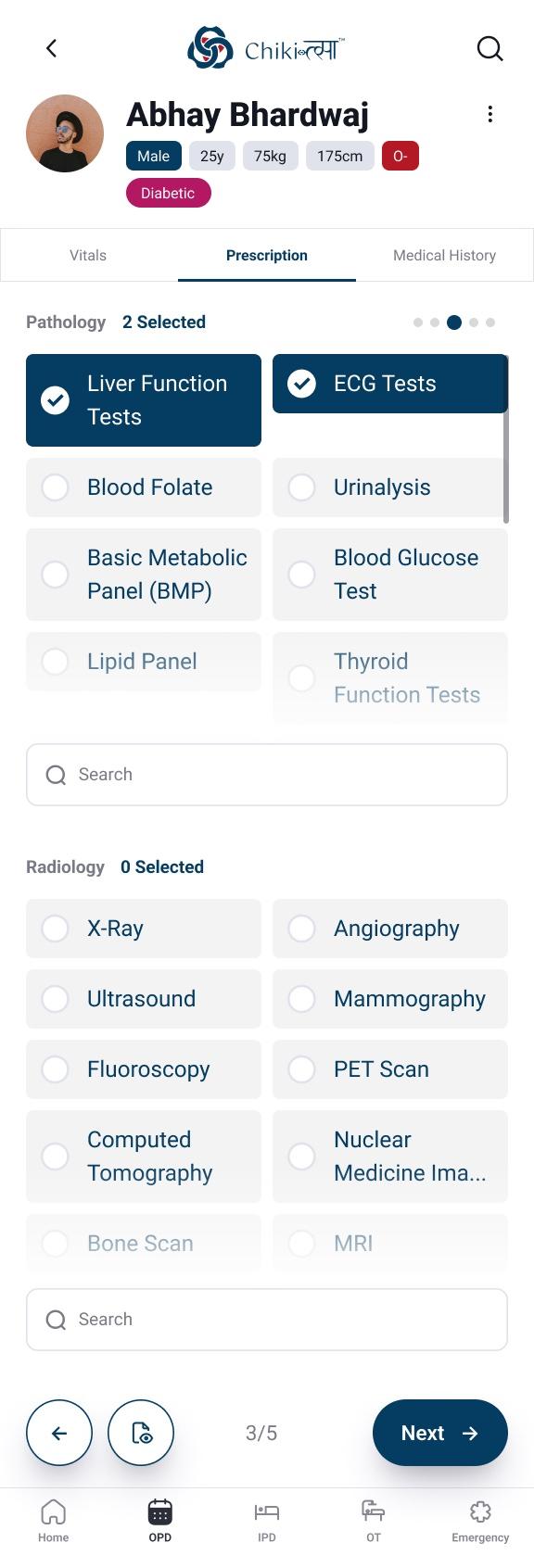
Decision 3 · step 3 of 5
Investigations
Pathology and radiology, picked in a tap.
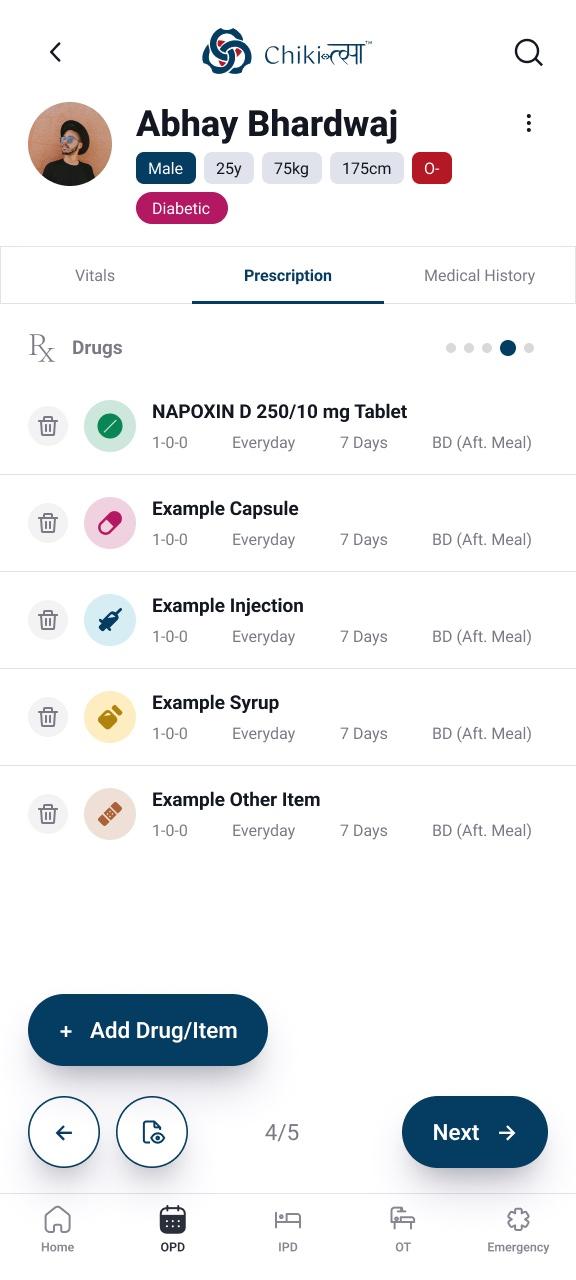
Decision 3 · step 4 of 5
Medicines
Dose, frequency and duration per line. Testing cut prescribing from 4 clicks to 2.
Decisions 3 and 4 · step 5 of 5
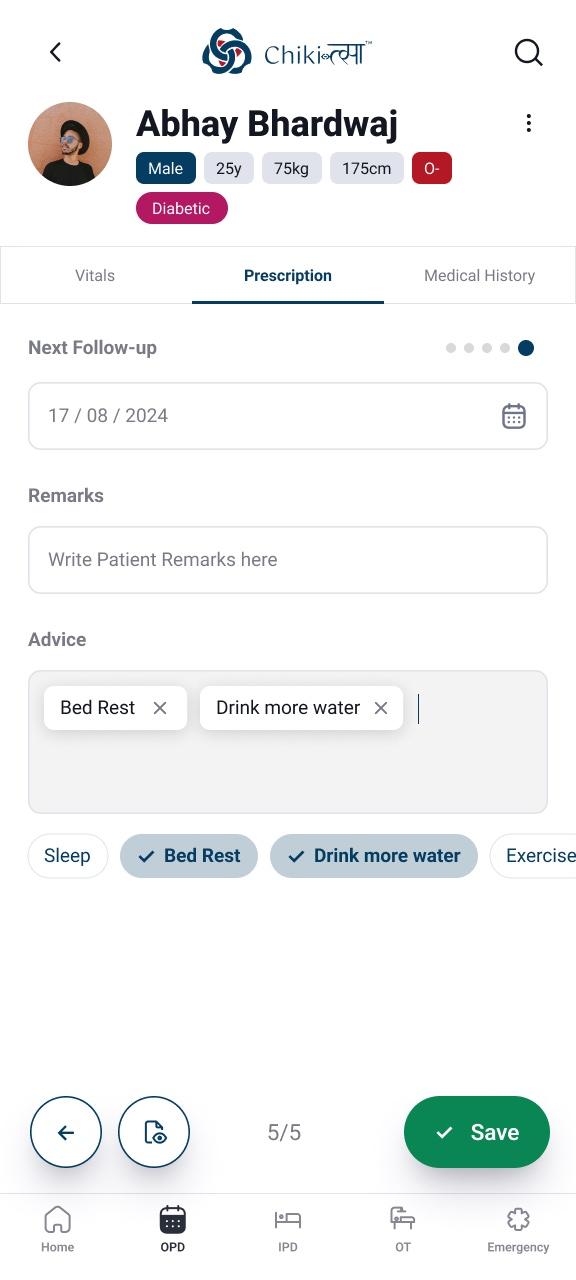
Advice and follow-up, from the doctor's own shortcuts
Frequent advice, complaints and medicines come back as one-tap chips.
Decision 5
Hand-offs without a phone call
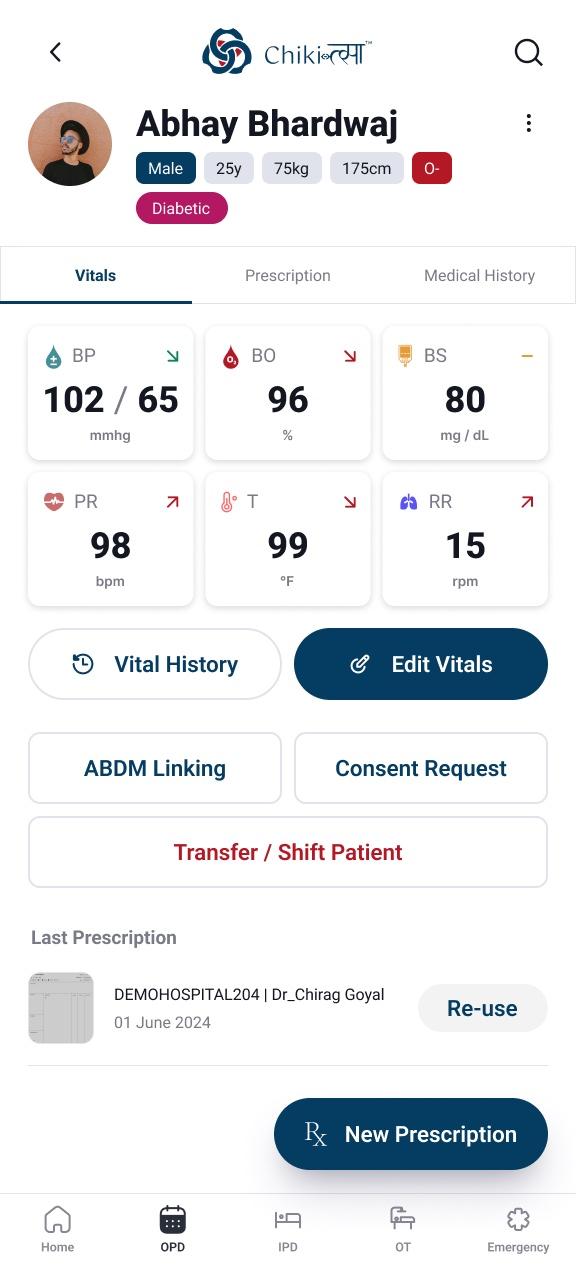
Shift a patient to another doctor or admit them to IPD from the patient screen, with a reason and the urgency.
The web system
Behind the counter
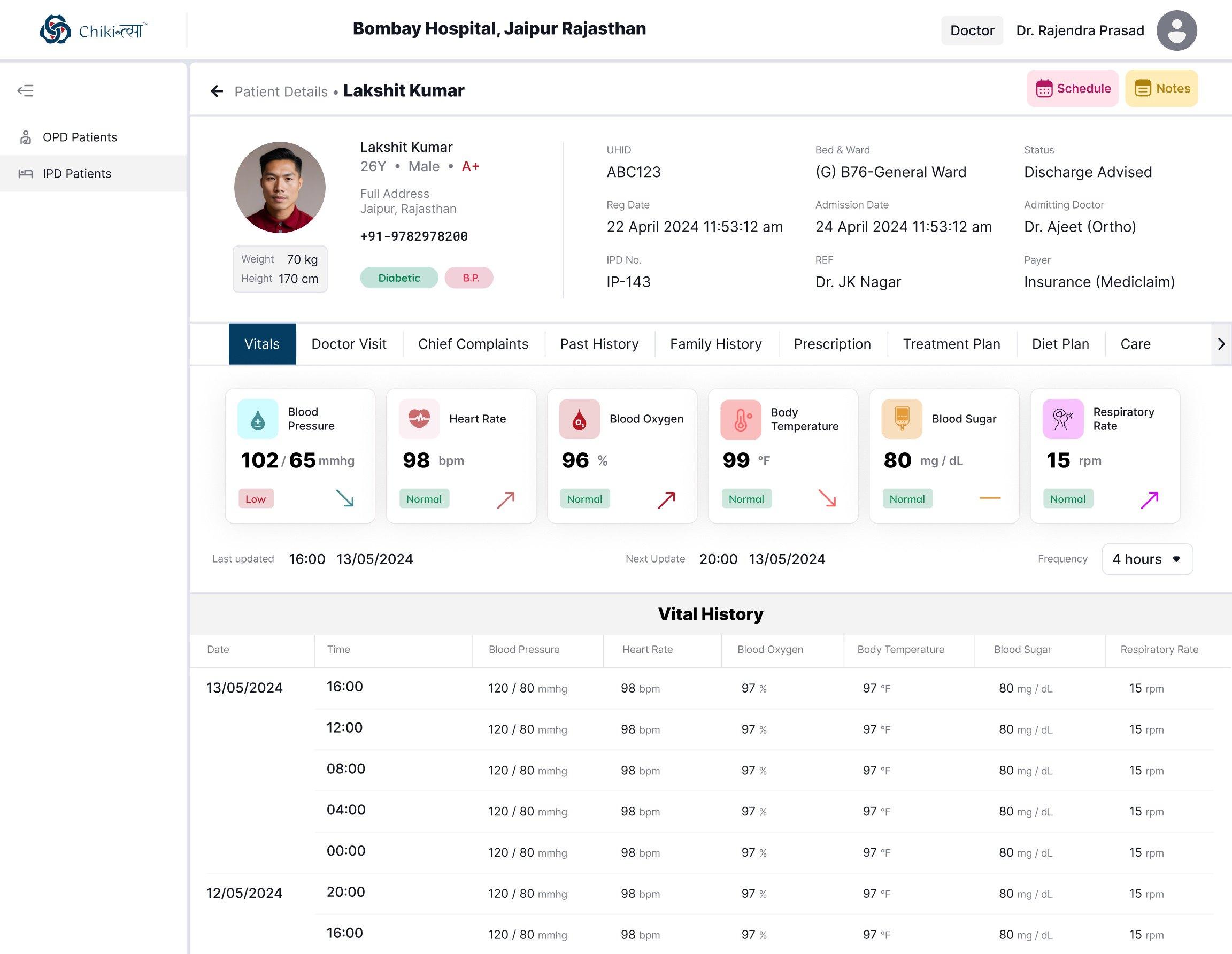
Bed assignment, the IPD record with vitals history, insurance pre-authorization through to settlement, billing and pharmacy, a token board for waiting rooms, and an overview of the whole hospital.
Three workshops, 60+ concepts, 15 picked for the first release, and six weeks from paper to high fidelity. Then moderated think-aloud sessions: SUS 78.5 (grade B), 87.5% task success, 12% faster than target.
37.5%found analytics without help
Moved analytics into the main navigation, added dashboard widgets
100%found it
4 clicksto prescribe, against 1 or 2 expected
Merged steps and added keyboard shortcuts
2 clicks40% faster
25%missed the AI insights panel
Made it more prominent, with indicators
100%noticed it
40% less time on administration
40%
less administrative time
60%
faster record retrieval
25%
more patients seen per day
94%
daily use within 2 weeks
Also: 75% fewer scheduling conflicts, 35% fewer billing errors, 89% user satisfaction and 67% fewer support tickets. Compared with the baseline from the diary study and shadowing, measured over the first 4 weeks at the launch hospitals.
“This is the first EMR that actually helps me practice medicine.”A doctor
“Training new staff takes days instead of weeks.”A front-desk manager
Watch first, then ask
Watching people work showed the inefficiencies they had stopped noticing. Card sorting showed that doctors and administrators organize information differently, so the IA follows each of their mental models instead of one compromise. And AI earned trust only when it showed its reasoning and left the final call to the doctor.